About Fonbet KHL All-Star votes
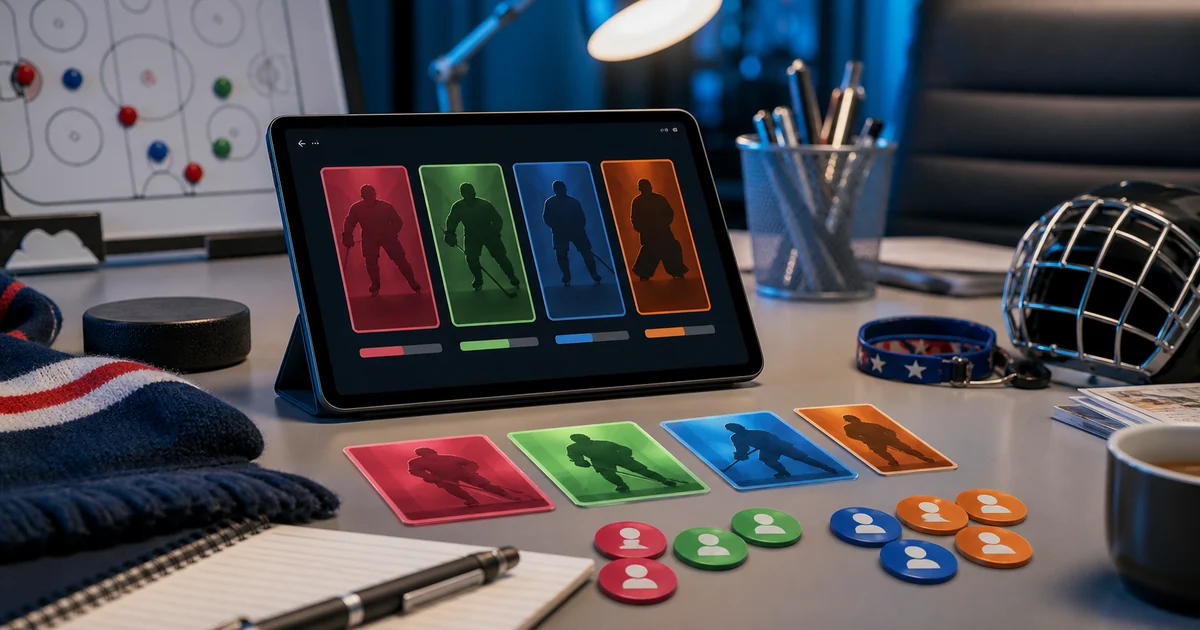
The Fonbet KHL All-Star fan ballot is Russian professional hockey's premier popularity vote, deciding which players from the league's 23 clubs represent their country, region, or age group at the annual All-Star Week. Voting runs for roughly ten days each November on khl.ru, where registered fans select a goaltender, a defenseman, and two forwards for each of four distinct squad categories — RUS Stars, World Stars, Ural Stars, and U23 Stars. Each fan can update their selection once per day throughout the window, which means that a dedicated daily campaign can steadily build a lead in any squad category. This page explains exactly how paid fan votes work for the KHL ballot, what the mechanic demands, and how we deliver safely from Russian residential networks. Packages start at 100 votes for $6.99.
About the Fonbet KHL All-Star votes contest
The KHL All-Star Game launched with the league's first season in 2008 and has since become one of the signature events on the Russian hockey calendar. Fonbet, Russia's largest licensed bookmaker, became the title sponsor of the event from 2022, and the full official branding is now Фонбет Матч Звёзд КХЛ (Fonbet All-Star Match KHL). The league runs the fan vote through its own platform at khl.ru, supplemented by the allstarweek.com portal dedicated to All-Star Week programming. The four squad structure introduced in recent seasons reflects the KHL's geographic and demographic breadth: the RUS Stars squad draws the top Russian players from all 23 clubs; the World Stars squad covers international players including legionnaires, Belarusians, Kazakhs, and Finns; the Ural Stars squad is a regional team built exclusively from Avtomobilist Yekaterinburg, Metallurg Magnitogorsk, Salavat Yulaev Ufa, and Traktor Chelyabinsk; and the U23 Stars squad gives platform to players born on or after January 1, 2003. Within each squad, fans vote for one goaltender, one defenseman, and two forwards, creating twelve player slots across four teams that fans influence directly. Final rosters blend the public tally with selections by accredited media representatives and the league itself, meaning the fan vote carries genuine weight in determining which players appear at the event. The 2026 All-Star Week was held in Yekaterinburg with the Ural Stars hosting; the vote ran November 25 through December 3, 2025, with Linus Fällgren, Nikita Gusev, and Maxim Dolganov leading on the final day before the close.
Why Fonbet KHL All-Star votes matter for your contest
The one-change-per-day mechanic sounds light until you consider the competitive dynamics. Every day of the ten-day window is a chance for rivals to push their candidate ahead; missing a single day means ceding ground that the daily cap prevents you from recovering. The KHL ballot's organic vote pattern looks like Russian metropolitan internet — Moscow, Saint Petersburg, Kazan, Ufa, Yekaterinburg — with some Belarus and Kazakhstan traffic for the World Stars and regional squads. A campaign built on a single datacenter IP or a burst of votes on day one contradicts the expected daily-update pattern that khl.ru's session tracking observes. What the platform expects is a fan who visits khl.ru each day, browses the standings, and updates their vote selection — a routine activity that generates a consistent fingerprint across the window. For the Ural Stars squad specifically, the expected geography is tightly regional: Sverdlovsk, Chelyabinsk, and Bashkortostan residential traffic, not Moscow-centric. For the RUS Stars and World Stars, the audience is league-wide and multi-city. Building a vote campaign that respects these geographic and behavioural expectations is the difference between a lead that holds through the final day and one that collapses under the platform's fraud review before the roster is announced.
How we deliver Fonbet KHL All-Star votes
After you confirm the player's name, squad category (RUS Stars, World Stars, Ural Stars, or U23 Stars), and position (goaltender, defenseman, or forward), we confirm eligibility against the current ballot and map your order across the voting window. Votes are cast as daily selection updates from Russian residential connections on Rostelecom, MTS, Beeline, MegaFon, and TTK — the five dominant Russian ISPs whose IP ranges khl.ru expects to see from domestic fans. For RUS Stars and World Stars orders we weight toward Moscow and Saint Petersburg with secondary coverage from Kazan, Nizhny Novgorod, and Novosibirsk to match the league's national audience distribution. For Ural Stars candidates we concentrate delivery on Sverdlovsk Oblast, Chelyabinsk Oblast, and Bashkortostan residential networks, mirroring the geographic base of the four Ural clubs. For U23 Stars candidates we spread delivery across major Russian university cities — Moscow, Saint Petersburg, Kazan, Yekaterinburg — where younger hockey fans concentrate. Each session includes a natural browsing pattern on khl.ru before and after the vote update, so the per-account behaviour looks like a returning fan checking standings. Large orders are paced evenly across the full remaining voting window; smaller orders can complete in three to five days. You monitor progress on a live dashboard, and any vote removed by the platform within seven days is replaced at no additional charge.
How we avoid platform detection
The KHL fan ballot on khl.ru runs session-level checks on IP origin, account age, and the frequency of vote updates. The platform allows one selection change per day per account — a mechanic that is itself a fraud signal when bypassed: a legitimate fan physically cannot update more than once per 24-hour period. The patterns that trigger invalidation are accounts that update multiple times in a day, IP addresses belonging to VPN exit nodes or hosting providers rather than real Russian ISPs, newly created accounts that vote on day one and never return, and bursts of new account activity concentrated in a short window that does not match the contest's gradual daily rhythm. We address each of these directly. IP addresses originate exclusively from Russian residential and mobile networks — no datacenter or proxy ranges. Accounts have normal browsing history and visit khl.ru across multiple sessions, not just on vote days. The daily pace follows the one-change-per-day cap exactly, which means delivery feels like a sustained fanclub effort rather than a sudden injection. The Ural Stars category is under tighter geographic scrutiny because its voter base is geographically defined — we apply the appropriate regional ISP weighting for those orders. Because the final roster combines fan tally, media votes, and league selection, the fan component sits under editorial review as well as automated checking, making a convincing daily curve more valuable than a high single-day total.
What is the best voting strategy for Fonbet KHL All-Star votes?
The strongest Fonbet KHL All-Star campaigns treat the daily cap as an asset rather than a constraint. Ten days of consistent votes, each arriving as a daily selection update, build a lead that looks completely organic from the organiser's perspective. Start your campaign on the first day the ballot opens — the khl.ru standings are published in real time, and a player who leads from day two generates press coverage on KHL.ru and in Russian sports media that drives secondary organic votes from fans who notice a favourite is in contention. For the Ural Stars category, coordinate with the relevant club's official fan groups if possible: Avtomobilist, Metallurg, Salavat Yulaev, and Traktor all have active social communities, and their organic activity combined with a paced paid supplement creates the most defensible pattern. For U23 Stars candidates, the pool of competing players is smaller, so a moderate campaign has an outsized impact. Aim for a lead that is comfortable but realistic: finishing 15–25% ahead of the nearest rival in a competitive forward slot is defensible; a 10× lead over an equally popular player would attract scrutiny. Order before the voting window opens if you can — once the ballot is live, every missed day is an irreversible loss of daily cap capacity.
Legal scope and terms
The Fonbet KHL All-Star ballot is a sports entertainment popularity contest run by a private professional sports league. It is not a public election, government referendum, or any form of regulated ballot under Russian, EU, or international law. Fan campaigns, organised club supporter voting, and daily coordination are a normal feature of KHL fan culture — clubs openly encourage their fanbases to vote every day during the window. We do not interpret the KHL's specific contest terms for you: review the official rules at khl.ru before placing an order and treat that review as your own responsibility. We do not serve political elections, government processes, or any regulated voting mechanism under any jurisdiction.
Getting started in two minutes
Ordering takes about two minutes. In the order form or live chat, share the player's name, their squad category (RUS Stars, World Stars, Ural Stars, or U23 Stars), their position (goaltender, defenseman, or forward), and your campaign deadline. Choose a package from 100 to 20,000 votes, complete payment, and your order enters the delivery queue immediately. Most orders begin dispatching within 60 minutes. If the KHL announces an updated ballot or adjusts the voting window mid-campaign, contact support and we pause and adjust delivery at no extra cost.