
signup
5 Mistakes Sign-Up Contest Vote Buyers Make
Avoid five costly mistakes when buying votes for sign-up required contests — timeline errors, account quality gaps, budget miscalculations, and refill terms to demand.
Read more →Feast Magazine's annual FEAST 50, published as "Our Readers' 50 Food Faves," names 50 St. Louis area food and drink honorees each year by blending reader input with the magazine's current editorial picks, a different mechanism from the region's other two best-of ballots.

Disclosure: buyvotescontest.com is a vote-promotion service. This is independent, informational coverage of a public contest run by a third party; we are not affiliated with the organizer. Where our own services are relevant they are clearly labeled, and the contest's official rules always take precedence.
Three St. Louis programs ask roughly the same question, "what's the best local business," and answer it three different ways. Riverfront Times runs Best of St. Louis at vote.riverfronttimes.com across arts, restaurants, services, and sports. St. Louis Magazine runs the roughly 150-category A-List, write-in nominations first, then a public finalist ballot, at stlmag.com/alist. Feast Magazine runs FEAST 50, and it never touches anything outside food and drink.
That narrower scope is the whole point. A restaurant weighing which St. Louis recognition actually fits its business doesn't need a program built for auto shops and theater companies too.
| Program | Publisher | Scope | Mechanism |
|---|---|---|---|
| FEAST 50 | Feast Magazine | Food and drink only | Reader input plus current editorial picks |
| Best of St. Louis | Riverfront Times | Arts, restaurants, services, sports | Public ballot at vote.riverfronttimes.com |
| A-List | St. Louis Magazine | ~150 categories, all business types | Write-in nomination, then finalist vote |
Feast Magazine's own name for the program, "Our Readers' 50 Food Faves," names the reader half of that mechanism directly. What it doesn't spell out publicly is a click-to-vote ballot page comparable to vote.riverfronttimes.com or stlmag.com/alist. See the Best of St. Louis guide and the A-List St. Louis Magazine guide for how those two ballots actually work end to end.
A wine bar with a small kitchen could plausibly enter all three St. Louis programs in the same year. Each one hits a different audience, and each carries a different kind of weight.
FEAST 50 comes from a publication whose entire identity is food coverage: restaurant reviews, chef profiles, dining trends across the region. A placement there reads as a food-media pick first and a popularity contest second, because "current editorial picks" sits right in how Feast Magazine describes the program alongside reader input. Best of St. Louis and the A-List are general-interest ballots where a restaurant competes in one category among dozens; FEAST 50 never asks a restaurant to share a page with a plumber or a yoga studio.
That focus cuts the other way too. A business outside food and drink has no path onto FEAST 50 at all, no matter how strong its following. For a broader St. Louis or Missouri push, the Missouri contest hub rounds up the rest of Missouri's business and sports ballots, food-focused or not.
Reader input. Current editorial picks. Fifty honorees. Those three elements are what "FEAST 50: Our Readers' 50 Food Faves" confirms about its own structure, and building a campaign on more than that risks promising something Feast Magazine hasn't actually published.
No confirmed vote cap. No confirmed nomination deadline. No confirmed breakdown of the 50 slots by category, whether that's pizza, coffee, breweries, or something else entirely. Riverfront Times and St. Louis Magazine both publish a dedicated voting URL a business can point supporters toward directly; Feast Magazine doesn't appear to run that same kind of standalone ballot page. Better to say so plainly than to describe a "vote now" button that may not exist in that form.
| Fact | What's confirmed |
|---|---|
| Program name | FEAST 50: Our Readers' 50 Food Faves |
| Organizer | Feast Magazine |
| Official site | feastmagazine.com |
| Scope | Food and drink only |
| Selection method | Reader input combined with current-year editorial picks |
| Cadence | Annual, historical run confirmed across prior years |
Confirm the live nomination window, any submission form, and the current year's publish date directly on feastmagazine.com. A business that assumes last year's timeline still applies risks missing the window entirely.
The Hill built its name on Italian groceries and red-sauce restaurants that have run for generations. Soulard pairs its farmers market with a bar scene that never fully sleeps. Cherokee Street carries the city's strongest concentration of Mexican and Latin American kitchens. Any FEAST 50 reader nominating a favorite is pulling from one of those very different food identities, not a single generic "St. Louis restaurant" category.
Central West End, Delmar Loop, Tower Grove South, Maplewood, and Clayton round out the metro's other dense food corridors, each with its own regulars and its own reasons to nominate a neighborhood favorite. A Clayton wine bar's readership skews toward a different Feast Magazine audience than a Cherokee Street taqueria's, even though both could land among the same year's 50 honorees.
None of that changes the program's food-only boundary. A business outside restaurants, bars, cafes, or food retail has nowhere to go here, whatever its neighborhood. Campaign tactics that work for one St. Louis award often transfer to another: award-style vote campaigns covers ground that applies broadly, and restaurant vote campaign planning is built specifically for a food-focused list like FEAST 50.
"FEAST 50 2026 honoree" holds up once feastmagazine.com actually publishes that year's list with the business named on it. A bare "St. Louis's best" claim, with no year and no Feast Magazine citation attached, goes further than anything confirmed here and risks misstating a food-media pick as something bigger than it is.
Because Feast Magazine folds reader input together with its own current editorial picks, a FEAST 50 placement isn't purely a popularity outcome the way a straight vote count would be. That's worth stating plainly to customers too. Real support from real diners still matters to the reader half of that mix, but it isn't the only input Feast Magazine's editors weigh.
A vote-promotion service can help a food business reach the regulars it already has during whatever reader-input window Feast Magazine runs. It can't guarantee an editorial pick, and it can't manufacture the historical track record FEAST 50's name implies. See how online contest votes work to understand the basics of a push like this, and check is buying votes legal before any budget goes toward a St. Louis food award campaign, FEAST 50 included.
Best of St. Louis lives at vote.riverfronttimes.com and the A-List lives at stlmag.com/alist, each its own dedicated voting page. FEAST 50 doesn't appear to run that way. The program shows up as magazine content on feastmagazine.com itself, so a supporter has to find that year's actual FEAST 50 feature rather than bookmark a standalone ballot URL.
Feast Magazine's own program name, "Our Readers' 50 Food Faves," confirms a reader-input stage exists. What isn't confirmed publicly is the exact submission form, deadline, or per-person limit, so a business pointing customers toward FEAST 50 should link the live feastmagazine.com page for that cycle rather than describe a fixed process from memory.
Unlike a pure vote count, FEAST 50 blends reader input with the magazine's current-year editorial picks. A restaurant with strong reader support isn't automatically guaranteed a slot the way a straight top-50-by-votes list would work; Feast Magazine's own editorial judgment plays a role too.
Feast Magazine has run FEAST 50 across prior years, a historical pattern confirmed for this guide, and the published feature itself, not a live leaderboard, is where a business finds out whether it made that year's 50. Treat anything earlier as unconfirmed.
12 answers covering legality, delivery, quality, pricing and platform specifics.
Last reviewed June 2026. Contest dates, rules and vote caps change each season — always confirm the current rules on the official contest page before you vote.
Practical guides, technical deep-dives, and anonymized case studies.60+ articles. Selection rotates.
Avoid five costly mistakes when buying votes for sign-up required contests — timeline errors, account quality gaps, budget miscalculations, and refill terms to demand.
Read more →
Win Instagram Reels contests in 2026 — entry optimisation, vote mobilisation tactics, and safe supplemental vote services to maximise your ranking.
Read more →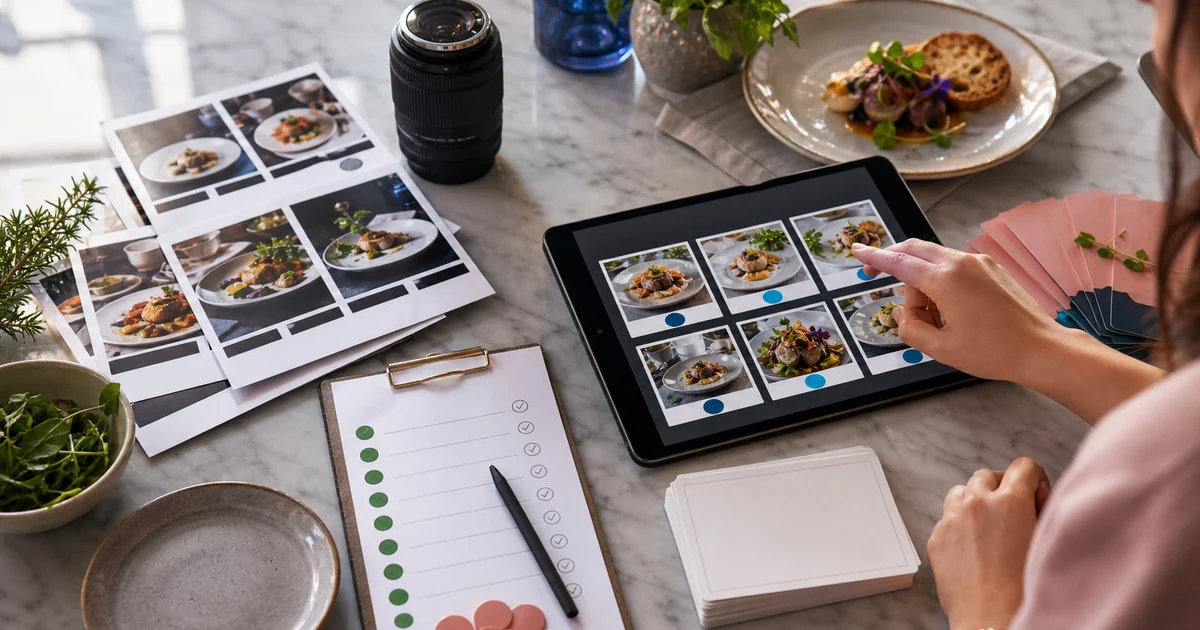
Run and win Facebook restaurant photo contests in 2026 — vote tactics, customer mobilization, content formats, and turning a contest win into paying guests. Start now.
Read more →
How email-verified contest voting works — confirmation link mechanics, delivery timelines, service selection criteria, and what professional providers do that others cannot.
Read more →
How a community arts organization used a structured two-tranche vote strategy to win an email-verified $25,000 grant contest — with campaign decisions documented.
Read more →
How fitness brands win Instagram contests in 2026 — vote strategy, transformation content, community mobilisation, and post-contest revenue conversion.
Read more →
Hi 👋 — drop your contest URL and I'll send a price quote within an hour. No card needed yet.