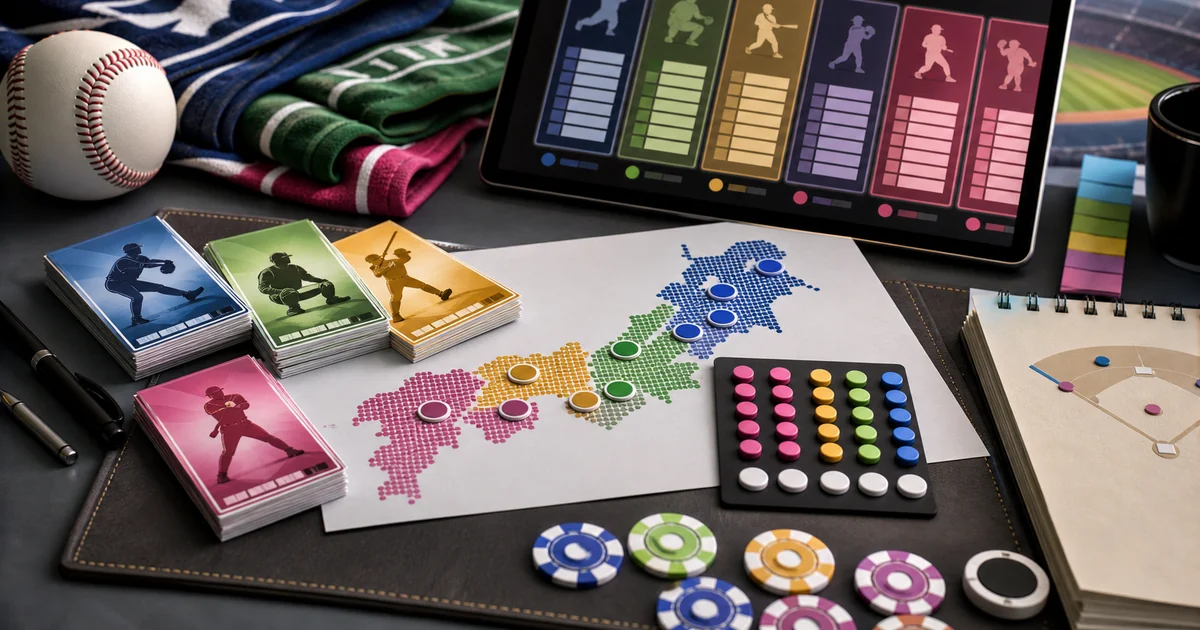
About NPB Mynavi All-Star Game votes
The NPB Mynavi All-Star Game ballot is Japan's most prominent annual baseball popularity vote, deciding which players from all twelve professional clubs start the midsummer showcase at each defensive position. Voting runs through npb.jp using registered accounts — Central League fans choose from teams like the Yomiuri Giants, Hanshin Tigers, and Hiroshima Carp, while Pacific League supporters back clubs including the Fukuoka SoftBank Hawks, Saitama Seibu Lions, and Chiba Lotte Marines. Getting a player elected as a starter carries genuine career prestige, generates national media coverage, and signals to clubs that a player has built the kind of fanbase that fills stadiums. For supporters of a rising pitcher, an underappreciated infielder, or a fan-favourite outfielder caught in a competitive ballot, a structured vote campaign can make the difference between a starting nod and sitting on the bench during NPB's biggest showcase event. Packages start at 100 votes for $6.99, with most orders beginning within 60 minutes of payment.
About the NPB Mynavi All-Star Game votes contest
Japan's professional baseball All-Star series has a history stretching back to 1951, making it one of the oldest midsummer fan-ballot events in global professional sport. The modern event typically takes the form of two games held on consecutive days at different stadiums — the 2025 edition was hosted in Osaka and Yokohama, drawing from the full breadth of NPB's twelve-team structure. Mynavi Corporation, a major Japanese recruitment and career-services group, has been the title sponsor of the series under the Mynavi All-Star Game branding for multiple seasons, anchoring the event as a premium corporate property in the Japanese summer sports calendar. The ballot itself covers position-by-position selection: starting pitcher, relief pitcher, catcher, first baseman, second baseman, third baseman, shortstop, and three outfield spots make up the Central League ballot, with the Pacific League adding a designated hitter slot. Fan votes determine the starters, while the remainder of each 30-man roster is filled through a combination of player voting and manager selection. A separate Plus One Vote, typically held for roughly a week in early July after the main ballot closes, lets fans elect one additional player per league who would otherwise have missed the cut — a mechanism that has delivered dramatic late-stage swings in past seasons when organised fanbases mobilised at the last moment.
Why NPB Mynavi All-Star Game votes matter for your contest
Japan's baseball fandom is intensely regional. Yomiuri Giants fans dominate the Kanto metropolitan area; SoftBank Hawks supporters fill Fukuoka Prefecture and much of Kyushu; Hiroshima Carp fans are one of the most passionate concentrated fanbases in any professional sport, producing enormous vote totals from a city of under a million people. An organic-looking vote pattern for the NPB ballot is therefore Japanese, geographically diverse, and spread across the full voting window rather than arriving in a single rush at the close. Organisers tracking vote tallies can identify anomalies: a player whose count climbs steadily from the first day of the window, drawing from multiple prefectures, reads as an active fanbase doing what NPB fanbases actually do — voting daily, sharing on social media, organising in local supporter clubs. A player whose count spikes by tens of thousands overnight from a flat base invites scrutiny. The account-based voting requirement on npb.jp is itself a quality filter: every vote must come with a valid registered session, which means mass IP-rotation tools that work on click-based polls fail immediately against NPB's authentication layer.
How we deliver NPB Mynavi All-Star Game votes
Once you confirm your player's name, NPB club, and ballot position, we verify eligibility against the active npb.jp ballot and map your order across the open voting window. Votes come from real npb.jp-registered accounts using Japan residential and mobile connections on SoftBank, au (KDDI), NTT docomo, and NURO Hikari lines. We weight delivery to reflect the actual geographic spread of Japanese baseball fandom: Kanto (Tokyo and Kanagawa) receives the largest allocation as the most densely populated region, followed by Kansai (Osaka, Hyogo, and Kyoto), Tokai (Aichi and Shizuoka), and Tohoku for teams like the Tohoku Rakuten Golden Eagles whose fanbase is concentrated in Miyagi Prefecture. For club-specific campaigns — say a Hiroshima Carp player where the fanbase is overwhelmingly Hiroshima Prefecture — we can skew the regional weighting accordingly. Each account casts its vote at a different point in the day, with higher density during Japanese evening hours (19:00–22:00 JST) and morning commute windows (07:00–09:00 JST), matching how real fans interact with the npb.jp portal around their daily routines. Any vote that fails npb.jp's session quality check mid-delivery is replaced at no charge within the same day.
How we avoid platform detection
NPB's voting portal requires a valid registered account session for every ballot submission — this is not a simple click-to-vote mechanism. The platform checks for consistent session tokens, a registered account in good standing, and IP addresses that match the profile of Japanese residential internet users rather than hosting providers or VPN exit nodes. Campaigns built on unregistered IPs or freshly created accounts that vote on day one and go dark are the ones that surface in any systematic audit of the ballot data. Our delivery addresses each of these failure points directly. IP addresses come exclusively from Japanese residential and mobile ISPs — SoftBank, au KDDI, NTT Hikari, NURO, and docomo mobile networks — none of which appear on datacenter blacklists. Account credentials are aged and have genuine usage history on npb.jp prior to the voting campaign, so each account's session pattern is consistent with a normal registered user. We also avoid any mechanical delivery pattern: the hourly rate varies naturally across the day, and no single IP or account cluster dominates a short time window. The Plus One Vote, because it runs for roughly a week on a separate ballot, is treated as a distinct campaign with its own pacing — compressing a full order into five days requires a tighter schedule that we plan explicitly rather than scaling down a longer-window approach.
What is the best voting strategy for NPB Mynavi All-Star Game votes?
The most effective approach to the NPB Mynavi All-Star ballot is to start voting in the first week after the ballot opens, typically mid-May. Early vote totals for any position are often low because casual fans haven't engaged yet, so a few hundred paced votes in week one can put a player at the top of their position category during the period when fan sites and sports media are most likely to report on early leaders. That media visibility then drives secondary organic votes from fans who see their favourite player is competitive and decide to vote every day. Layer paid votes through the middle of the window to sustain momentum rather than burning all of your budget on the first few days; the goal is a count that rises steadily and looks like a well-organised fanclub working together across a full month. For the Plus One Vote, the compressed one-week window demands a tighter, front-loaded approach — the first 48 hours of that ballot are disproportionately decisive. Combine a paid campaign with genuine organic mobilisation: share the player's NPB.jp ballot link on X (Twitter), Mixi Sports, and line group chats, and ask supporters to vote once per day. The two approaches reinforce each other in a way that neither can fully replicate alone.
Legal scope and terms
The NPB Mynavi All-Star Game is a professional sports entertainment ballot run by the Nippon Professional Baseball Organization, a private sports body, under commercial sponsorship from Mynavi Corporation. It is not a public election, government referendum, or legally regulated voting process of any kind. Fan campaign organisations, supporter group vote drives, and club-coordinated ballot efforts are a normal and widely practiced part of Japanese sports fan culture. Before ordering, review the current season's voting terms posted on npb.jp — what any given year's rules permit is your determination to make by reading those terms directly, not ours to interpret on your behalf. We do not provide services for political elections, government processes, or any regulated ballot. We make no guarantee of a specific outcome, only of real, account-based, paced vote delivery from Japan-registered accounts.
Getting started in two minutes
Ordering takes about two minutes. Share your player's full name, their NPB club, their ballot position (for example: "starting pitcher, Central League" or "outfield, Pacific League — Saitama Seibu Lions"), and your target deadline in the order form or live chat. We confirm ballot eligibility before starting. Choose a package from 100 to 20,000 votes, complete payment by card, PayPal, or cryptocurrency, and your order enters the delivery queue immediately. Most orders begin dispatching within 60 minutes. If you are also planning a Plus One Vote campaign when that July window opens, flag it at order time — we can hold a portion of your budget to deploy when that separate ballot goes live.