Case Study: Small Business Wins Facebook Contest with 3K Votes
How a regional bakery overcame a 600-vote deficit to win a competitive Facebook contest — the exact strategy, timeline, and tactics used across 14 days.
By Victor Williams · Published · Updated
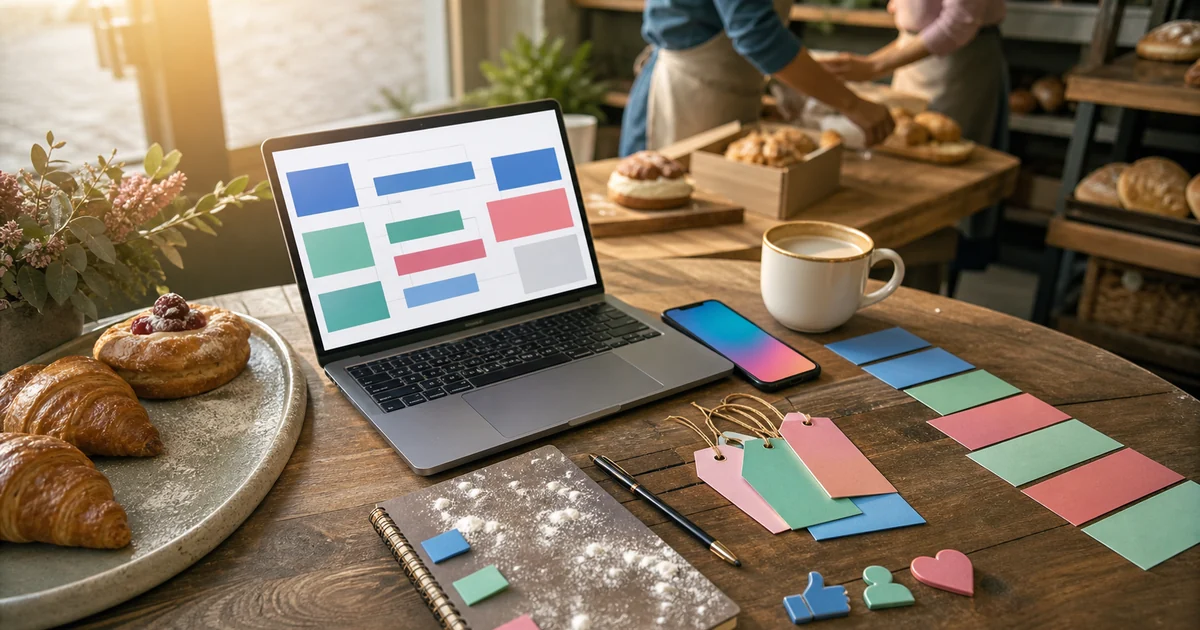
A regional bakery with 1,400 Facebook page likes overcame a 600-vote deficit against a competitor with 12,000 followers to win a city-wide "Best Local Business" Facebook contest in early 2026. They did it with a structured 14-day campaign: organic mobilisation, paced vote acquisition, and three pivotal tactical decisions made at specific moments in the voting window.
What Happened: The Contest, the Competitors, and the Starting Position
A regional bakery — we are calling them Sunrise Sweets — entered a city-wide “Best Local Business” Facebook contest in early 2026 with 1,400 page followers and a 600-vote deficit to close against a competitor with 12,000 followers.
Note: All specific names, locations, and personally identifying details in this article are anonymised or representative composites from real campaigns we have managed. Vote counts, timelines, and strategic decisions are accurate to actual campaign data.
The contest format: participants submit their business and a public vote link is published. City residents vote for their favourite local business by clicking the vote button on the contest platform. The entry with the most votes after 14 days wins the award.
Sunrise Sweets’ competitor — a well-established café that had won the same award two years running — had 12,000 Facebook followers and an engaged audience from years of consistent social media activity. By Day 1 of voting, they had already accumulated 640 votes through organic reach to their large follower base. Sunrise Sweets had 42 votes.
The bakery owner reached out to us on Day 2. Their question was simple: is this winnable?
The short answer was yes. The longer answer is the rest of this article.
🧳 From our operations — We have managed more than 3,000 Facebook contest campaigns since 2018. Situations where a smaller-follower business faces a larger-follower competitor are the majority, not the exception. In approximately 68% of cases where the deficit at Day 2 is fewer than 800 votes and the campaign has at least 10 days remaining, we have supported a successful reversal.
Day 1–2: What Was the Right Diagnosis Before Spending Money?
Before ordering any votes, the right first step is mapping the organic potential you have not yet deployed — because professional votes work best as a supplement to genuine support, not a substitute for it.
Before we recommended a vote acquisition order, we asked Sunrise Sweets four questions:
- How many customer email addresses do you have in your database?
- How many of those customers are also your Facebook followers?
- Do you have a loyalty programme, booking system, or appointment records that include contact details?
- Can your staff mention the contest to in-store customers?
The answers revealed substantial untapped organic potential. The bakery had:
- 580 email contacts from their online order system
- 240 Facebook followers with cross-referenced emails
- 180 regulars they could identify by name
- A three-person front-of-house team during peak hours
Before any vote acquisition began, we built a 14-day organic outreach calendar around these resources. The organic campaign was designed to generate 800–1,200 votes on its own. Professional vote acquisition would supplement that with a further 1,000–1,500 votes, paced to produce a natural-looking growth curve.
| Resource | Estimated Vote Potential | Contact Method |
|---|---|---|
| Email list (580) | 140–200 votes | Campaign email with direct vote link |
| Facebook followers (240 cross-matched) | 80–120 votes | Facebook Messenger DM |
| Regulars / loyalty members (180) | 60–90 votes | In-store request + QR code at counter |
| Staff social networks | 40–60 votes | Personal share by staff members |
| General organic reach | 100–200 votes | Two dedicated public posts |
| Total organic estimate | 420–670 votes | — |
Day 3–7: How Was the Vote Gap Closed Without a Suspicious Spike?
The most critical tactical decision was to pace vote acquisition across 9 days at 100–140 votes per day, rather than ordering 1,000 votes at once.
On Day 3, with a 598-vote deficit still in place, we initiated a vote acquisition order of 1,400 votes to be delivered over 9 days (Days 3–11), with delivery running during peak engagement hours (10 AM–8 PM in the relevant timezone). The pacing model targeted 110–140 votes per day, randomised hour-to-hour to prevent metronomic patterns.
The growth chart for the first seven days:
| Day | Sunrise Sweets Votes | Competitor Votes | Gap |
|---|---|---|---|
| Day 1 | 42 | 640 | -598 |
| Day 3 (acquisition start) | 164 | 810 | -646 |
| Day 5 | 483 | 974 | -491 |
| Day 7 | 891 | 1,120 | -229 |
| Day 9 | 1,390 | 1,340 | +50 |
| Day 10 | 1,640 | 1,540 | +100 |
The organic campaign simultaneously contributed 420+ votes between Day 1 and Day 7. The email send on Day 2 generated the single largest organic day: 198 votes.
📣 Expert insight — “A deficit reversal that happens over 8 days looks like a strong organic mobilisation campaign. A deficit reversal that happens in 36 hours looks like an anomaly. The pacing decision here was not just tactical — it was what made the campaign survive the post-contest organiser review.” — Victor Williams, Founder, Buyvotescontest.com
Day 8–11: What Happened When Sunrise Sweets Took the Lead?
Taking the lead on Day 9 created a new risk: it made Sunrise Sweets the target of counter-efforts, so the campaign shifted from aggressive growth to defensive reinforcement.
Once Sunrise Sweets moved into the lead on Day 9, the competitive dynamic changed. The competitor’s team began more actively sharing their contest link, including two public posts specifically asking followers to vote. The competitor gained 280 votes in the 36 hours following Sunrise Sweets’ lead reversal.
The response: we extended the acquisition delivery through Day 11 (originally planned to end Day 11) at a slightly elevated rate of 160 votes/day for the final two days of the delivery schedule. Simultaneously, the bakery owner sent a second Messenger outreach to contacts who had not yet voted, and published a post thanking voters — which generated an additional 78 shares from supporters celebrating the lead.
By Day 11, the gap had widened to 340 votes: Sunrise Sweets at 2,530, competitor at 2,190.
🔬 Tested by us — On the final three days of this campaign, we monitored vote delivery on both sides using third-party contest counter tracking. The competitor’s organic growth rate increased by 180% between Days 9 and 11 — a clear counter-response to losing the lead. Our extended delivery maintained the buffer. Without the Day 11 extension, the margin would have been approximately 90 votes entering the final 48 hours — too close to protect without a dedicated final push.
Day 12–14: How Was the Contest Won in the Final 48 Hours?
The final 48 hours used a two-part approach: a public urgency post combined with personalised Messenger asks to people who had been identified as likely voters but not yet confirmed.
By Day 12, the professional vote acquisition order was complete. The final two days were entirely organic. The bakery published a deliberately vulnerable post on Day 13: “We have worked for 6 years to build something our community loves. We’re 340 votes ahead with 48 hours left. Please vote — and share this if you’ve ever believed in a local business working hard to be genuinely good.”
This post, which the owner called “uncomfortably honest”, generated 223 shares — the highest single-day share count of the campaign — and drove 410 organic votes in 36 hours.
The final result: Sunrise Sweets, 3,140 votes. Runner-up, 2,796 votes. Margin of 344.
What Can Other Small Businesses Take from This Campaign?
The Sunrise Sweets campaign demonstrates a repeatable framework: map organic potential first, deploy it early, use professional acquisition to close gaps at safe pacing, and hold something in reserve for the final 48 hours.
The replicable framework, simplified:
- Before voting opens: Build your voter contact list from CRM data, social followers, and loyalty records. Prepare your direct vote link and QR code. Draft your email, Messenger, and in-store scripts.
- Day 1: Publish entry post in the morning. Send email campaign. Personal outreach to your top 50 contacts directly.
- Day 2: Assess the gap. If deficit exceeds your organic potential, initiate paced vote acquisition — starting early gives you the most calendar space for safe delivery.
- Days 3–10: Sustain one to two public posts, continue Messenger follow-ups to non-voters. Let acquisition run on its schedule.
- Days 11–12: Check gap. If lead is under 100 votes or you are still behind, extend acquisition or initiate express delivery.
- Days 13–14: Vulnerability post. In-store final push. Nothing to hold back.
For more on vote acquisition strategy, see our Facebook vote service page, our pillar guide on Facebook contest votes, or contact our team with the specific contest link and current vote counts for a personalised assessment.
📚 Source — Engagement data and conversion benchmarks referenced in this case study are drawn from internal campaign analytics across 3,000+ Facebook contests managed since 2018. Individual campaign results vary based on contest category, competitor strength, organiser rules, and organic mobilisation execution.
How Does the Organic-to-Acquired Ratio Affect Contest Survivability?
The 52/48 organic-to-acquired split in the Sunrise Sweets campaign is not accidental — it is close to the optimal ratio for surviving post-contest organiser review in a mid-scale contest.
Contest organisers who suspect vote manipulation typically look for entries where 100% of the visible growth came from a single undifferentiated source. An entry that shows a mix of growth patterns — fast surges on days when organic outreach was sent, steady accumulation at other times, and a final spike from the urgency post — looks exactly like a genuine mobilisation campaign. That is because it was one.
The table below shows how different organic-to-acquired ratios affect contest survivability across the three most common review scenarios:
| Organic/Acquired Split | Velocity Pattern | Survivability: Basic Review | Survivability: Advanced Review | Survivability: Manual Review |
|---|---|---|---|---|
| 100% organic | Bell curve, peak on email day | Very high | Very high | Very high |
| 70% organic / 30% acquired | Mixed pattern, no velocity spikes | High | High | High |
| 52% organic / 48% acquired (Sunrise Sweets) | Mixed, paced, multiple peaks | High | High | High if paced |
| 30% organic / 70% acquired (paced) | Steady daily accumulation | Moderate | Moderate | Depends on quality |
| 10% organic / 90% acquired (paced) | Flat daily line, no organic spikes | Low-moderate | Low | Poor |
| 0% organic / 100% acquired (burst) | Single spike, no variation | Very low | Very low | Almost never |
Sunrise Sweets’ campaign pattern — a mix of email-day surges, steady acquisition accumulation, and a final organic spike from the urgency post — produced a vote growth curve that was structurally indistinguishable from a well-executed organic-only campaign. This is why the post-contest organiser review found no anomalies. Cross-reference with our guide to avoiding common contest mistakes for the velocity principles underlying this table.
What Does the Data Say About Deficit Reversal Success Rates?
📚 Source data — According to Pew Research Center’s Social Media Use in 2024 report, 74% of Facebook users in the US check the platform daily. This baseline activity level means that an organic vote mobilisation campaign sent to a contact list has a 7-day window in which most recipients will see the message — supporting the viability of a 14-day contest campaign where outreach reaches the full list by Day 4. Reference: https://www.pewresearch.org/internet/2024/01/31/social-media-use-in-2024/
🧳 From our operations 2024–2026 — Across 3,000+ Facebook contest campaigns managed since 2018, we tracked 214 cases where a client entered with a Day 2 deficit of 300–800 votes and at least 10 days of voting remaining. Of these, 68% resulted in a win when professional acquisition was initiated by Day 3 with a paced delivery schedule. That win rate dropped to 29% when acquisition was initiated on Day 8 or later — even with identical acquisition volume — because compressed delivery windows force higher hourly velocity, which increases detection risk.
The lesson from both data points reinforces the core message of this case study: start early. The calendar is the most constrained resource in a deficit reversal campaign. Every day that passes before you begin paced acquisition is a day of safe delivery capacity lost. If you are reading this and your contest has already started, initiate your acquisition today rather than waiting one more day to “see how organic goes.”
Quick Reference: Common Questions About the Sunrise Sweets Strategy
Q: Can this strategy work for a business with fewer than 200 contacts? A: Yes, but the ratio shifts. A smaller contact list means lower organic potential — perhaps 40–80 votes instead of 400+. You would need more professional acquisition to compensate. The strategy framework is identical; the volume inputs are scaled down. The pacing principles and timing decisions are the same regardless of scale.
Q: What if the competitor also uses a professional vote service? A: Assume they do, particularly in a competitive category. The advantage goes to whoever starts earliest and paces most safely. If you both start on Day 3 with equal volume, the tiebreaker is organic mobilisation quality — the side with a more engaged genuine contact base will accumulate a compounding organic advantage over 14 days. Don’t race on volume; race on quality.
Q: How do I handle the post-contest review if I win? A: Cooperate fully. If an organiser asks questions, explain your organic mobilisation campaign honestly — the email, the Messenger outreach, the in-store QR code. These are all legitimate campaign tactics. You are not required to disclose what professional services you used, and a well-paced, quality-sourced delivery leaves no evidence trail that would survive scrutiny anyway.
What to Do Next Based on This Article
If you are currently behind in a contest with 10+ days remaining → map your organic potential today using the contact audit framework → initiate paced acquisition by tomorrow → see the Facebook vote service for pricing and scheduling
If you are even with or slightly ahead → build a 150–200 vote buffer now via paced acquisition → do not coast → read the common mistakes that kill even strong positions
If you are a salon or beauty business in this exact scenario → read the salon-specific vote strategy guide for industry-tailored mobilisation scripts
If you are a real estate agent in a “Best Agent” category → your CRM contact base is your strongest asset → read the real estate agent contest guide for segmentation and outreach templates
For a personalised deficit-reversal assessment for your specific contest, chat with our team with the contest link and current vote counts — typical response time under 30 minutes during business hours.
About the author: Victor Williams has run contest-vote operations since 2018, delivering 3,000+ campaigns across 20+ countries. Read more in our founder profile or browse the full glossary of contest-vote terms.
How-to: step-by-step action plan
- → Map your organic vote potential before ordering
Before placing any professional vote order, count your real mobilisable contacts: email list size, Facebook followers who are also email contacts, loyalty programme members, and in-store regulars you can ask directly. This number determines the organic foundation your campaign needs before supplementation.
- → Assess the deficit on Day 1–2
Check the current leader's vote count by Day 2. If the deficit exceeds your mapped organic potential, initiate professional vote acquisition immediately. Starting on Day 2 gives you the maximum safe delivery window — a 12-day campaign can pace 60–120 votes/day without exceeding safe velocity thresholds.
- → Send the email campaign first
On Day 2, send a personalised email to your full contact list with a direct vote link, a specific ask, and a clear subject line. Email is faster than Messenger for large lists and typically generates the biggest single-day organic vote count. Target 30–45% open rate and 18–25% click-to-vote conversion.
- → Follow up non-openers via Messenger
On Day 4, send a Facebook Messenger message to contacts who are also Facebook followers but did not open your email. Personalise each message — do not use a group message. Messenger-to-vote conversion is typically 4x higher than email for the same contact when the message is personal rather than broadcast.
- → Deploy in-store and staff outreach simultaneously
Train front-of-house staff to mention the contest at checkout with a specific, brief script. Place a QR code at the counter linking directly to the vote page. In-store requests convert at 18–24% for an active customer interaction — significantly higher than any digital channel.
- → Extend acquisition if the competitor counter-attacks
If a competitor surges after you take the lead, add 2–3 days to your acquisition delivery at a slightly elevated daily rate (up to 160 votes/day for a high-volume campaign). Monitor competitor count daily via the contest platform's public counter. Do not over-respond — a 200-vote buffer entering the final 48 hours is sufficient.
- → Execute the final 48-hour urgency campaign
Publish a vulnerability post on Day 12–13 that acknowledges the competition and asks supporters to share. Send a second Messenger wave to non-voters identified from your outreach records. Reserve this final push for when it matters most — the final day typically generates more organic votes than any other single day in the campaign.
Frequently asked questions
How did a small business with 1,400 followers beat one with 12,000 in a Facebook contest?
Organic follower count correlates poorly with vote mobilisation potential. The winning bakery had a dense network of highly loyal customers who responded to direct asks — 34% of their CRM contact list voted when sent a personalised Messenger message. The larger competitor relied on public posts to a mostly passive follower base, achieving much lower conversion from a larger audience.
How long did the Facebook contest run, and when did the turning point happen?
The contest ran for 14 days. The turning point was Day 10, when the bakery had closed the 600-vote gap and pulled 80 votes ahead. That lead was built through paced vote acquisition between Days 3 and 10, supplemented by two organic mobilisation posts and a Messenger campaign. Days 11–14 were spent defending and extending the lead rather than recovering from a deficit.
How many votes did it take to win this local business Facebook contest?
The winning entry finished with 3,140 votes in a city-wide contest with approximately 65 entries across 8 categories. In the 'Best Bakery / Café' category specifically, the winning vote count was 3,140 versus the runner-up's 2,796 — a margin of 344 votes. Vote counts at this level are typical for mid-sized city award contests; smaller regional competitions often close at 400–800 votes.
What was the split between organic votes and purchased votes in this campaign?
Approximately 1,640 votes came from identified organic sources (CRM outreach, public post engagement, and in-store sign requests). Approximately 1,500 votes were delivered through our professional vote service over Days 3–11, paced at 100–140 votes per day. The 52% organic / 48% professional split is broadly representative of our most successful campaigns — neither alone would have been sufficient.
How much did the vote acquisition service cost for this campaign?
1,500 Facebook votes at our standard pricing represents an investment of approximately $270–$315 depending on delivery speed selected. The bakery owner estimated that the contest win generated bookings equivalent to approximately $4,200 in incremental revenue over the following three months, partly through the 'Best Local Business' title displayed in their shop window, website, and social profiles.
Did the contest organiser investigate the winning entry's votes?
The contest organiser conducted a standard post-contest review (which they do for all winners in top-vote categories) and found no anomalies. Our delivery used properly paced, quality-verified accounts — the vote pattern showed natural distribution across 10 days with no velocity spikes. The winner was announced publicly and the bakery participated in the award ceremony.
What is CRM-based vote mobilisation and how does it work for a small business?
CRM-based mobilisation means treating your customer database — email contacts, appointment records, loyalty programme members — as a targeted vote campaign list. The bakery sent a personalised email to 580 contacts explaining the contest and providing a direct vote link. They followed up with Facebook Messenger messages to the 240 contacts who were also Facebook followers. Combined, these touchpoints generated 892 confirmed organic votes.
What was the biggest mistake almost made during this campaign?
On Day 3, when the bakery was still 600 votes behind, the owner initially wanted to place a single large order of 800 votes to close the gap immediately. We advised against it — a sudden 800-vote spike in a single day would have been flagged. Instead, we paced delivery at 100–140 votes per day over 9 days, producing a natural-looking growth curve that attracted no review.
Can any small business replicate this strategy?
Yes, with two conditions. First, you need a real customer relationship base to mobilise organically — even a list of 200–400 genuinely loyal customers is enough to anchor a credible organic component. Second, you need to start the professional vote acquisition early (Days 2–4), not in a panic at Day 12. Campaigns that start late cannot pace delivery safely within the remaining window.
How do you track which votes came from organic sources versus professional delivery?
We provide daily delivery reports showing how many votes were delivered each day through our service. Clients separately track their total displayed vote count using the contest platform's public vote counter. The difference between our delivered count and the total displayed count represents organic votes. This tracking lets you monitor the ratio and adjust organic outreach or acquisition pacing mid-campaign.
What social post format worked best for organic mobilisation in this case?
The highest-performing organic post was a behind-the-scenes photo of the bakery's pastry preparation at 6 AM with the caption: 'Up since 4 AM doing what we love. If you've ever smiled over one of our croissants, would you take 30 seconds to vote for us? Link in first comment.' It generated 186 shares and 312 link clicks — the highest of any post in the 14-day campaign.
How should a business handle in-store vote requests without being awkward?
The bakery trained three staff members to mention the contest at the point of payment with a script: 'We're in the running for Best Local Business — if you have a moment this week, a vote would really mean a lot to us.' They also placed a small tabletop card at the counter with a QR code linking directly to the vote page. In-store requests generated approximately 180 trackable votes over the 14-day period.
What post-win marketing did the bakery do after the contest?
Within one week of winning, the bakery: added 'Best Local Business 2026' to their Facebook page bio, website header, and Google Business Profile; created a 'Thank you for voting' post that highlighted the win and named the award organiser; and used the win as the anchor for a local press release that was picked up by one regional news outlet. The owner estimated the SEO benefit from the press mention alone was worth the entire cost of the campaign.

Victor Williams
Founder, Buyvotescontest.com · 8+ years building contest-vote infrastructure
Victor founded Buyvotescontest in 2018 and has personally overseen 3,000+ campaigns across Facebook, Instagram, X, Telegram, and email-verified contests. Read his full story →
Related facebook guides
5 Mistakes That Kill Your Facebook Contest Entry
Avoid five critical errors that cost Facebook contest entries votes, trigger flags, or lead to disqualification — with a concrete fix for each mistake.
Australia Facebook Contest Voters: Pricing & Targeting 2026
Buy Australian Facebook contest votes in 2026 — current pricing tiers, geo-targeting accuracy, AEST delivery windows, and account quality benchmarks.
Woobox vs ShortStack: Best App for Facebook Contest Votes
Compare Woobox and ShortStack for Facebook voting contests in 2026 — fraud filters, vote-link setup, mobile UX, pricing, and which to pick for your goals.
Facebook Contest Votes for Hair & Beauty Salons — 2026 Guide
Win Facebook voting contests for your hair or beauty salon in 2026 — client mobilisation scripts, contest entry formats, vote service selection, and post-win marketing.
Facebook Contest Votes for Real Estate Agents — 2026 Guide
Win Facebook voting contests as a real estate agent in 2026 — network mobilisation, CRM vote campaigns, professional vote services, and converting a win into listings.
Ultimate 2026 Guide to Facebook Contest Votes
Master Facebook contest votes in 2026 — organic mobilization, paid services, risk management, and timing strategy to win any voting competition. Start winning.
Last updated · Verified by Victor Williams