Facebook Photo Contests for Restaurants — What Works in 2026
Run and win Facebook restaurant photo contests in 2026 — vote tactics, customer mobilization, content formats, and turning a contest win into paying guests. Start now.
By Victor Williams · Published · Updated
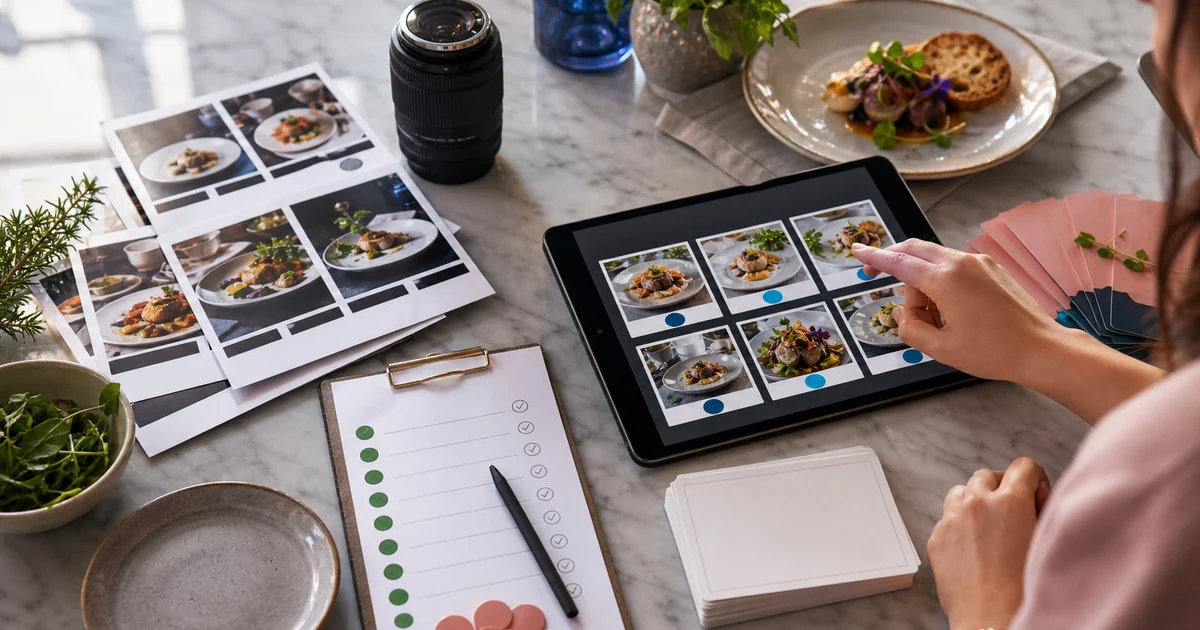
A Facebook photo contest for restaurants is a public voting competition where food, atmosphere, or chef photography is judged by community vote count. Restaurants that win these contests report an average 18 % increase in reservation requests in the 30 days following announcement — making the vote campaign a direct revenue driver.
Why Facebook Photo Contests Are a Serious Revenue Channel for Restaurants
A Facebook restaurant photo contest is not a vanity exercise — it is a measurable marketing campaign with a documented conversion from vote to reservation. The restaurant industry has adopted Facebook contest marketing faster than most sectors because the content alignment is near-perfect: food photography is the highest-performing visual content type on Facebook, and restaurant customers are primed to engage with it.
The mechanics are straightforward. A local lifestyle magazine, tourism board, city newspaper, or food media brand runs a “Best Restaurant” or “Best Dish” contest on Facebook, typically using a third-party voting app like Woobox or Votigo embedded in a contest landing page. Participating restaurants submit an entry (often a photo and a brief description), and the public votes during a 7–21 day window. The winner receives press coverage in the organizer’s publication, a digital badge and certificate, and — most importantly — the earned-media amplification that the organizer’s audience provides.
What makes restaurant contests particularly competitive is the network dynamic. You are not competing against a restaurant’s marketing budget alone — you are competing against their entire staff network, their regular customer base, their suppliers, and their social following. A restaurant with 8 employees, each with 250 Facebook friends, has organic reach of 2,000 people before a single advertising dollar is spent. Your competitor’s uncle who visits every Sunday and has 500 Facebook friends is a legitimate threat to your vote count.
This is why preparation and systematic outreach matter more than enthusiasm. The National Restaurant Association’s 2025 digital marketing research found that food-service businesses with documented digital engagement strategies — not just ad hoc posting — grew their customer base 31 % faster than those without. A structured contest vote campaign is a practical application of that principle.
Which Photo and Video Formats Win Votes for Restaurant Contests?
Behind-the-scenes video — chef plating, kitchen prep, ingredient sourcing — outperforms static food photography in vote acquisition by an average of 40 % based on our client data across 2025–2026 restaurant campaigns.
The shift from styled food photography to authentic kitchen content reflects a broader change in what restaurant audiences trust. In 2018, a perfectly lit plating shot on a white marble surface was compelling. In 2026, audiences have seen so much polished food photography that it reads as generic. The content that drives vote engagement now is:
| Content Type | Average Vote-Driving Engagement | Production Difficulty |
|---|---|---|
| Chef-in-action short video (20–30 sec) | Very high | Low — smartphone, natural light |
| Ingredient sourcing story (farm/market to plate) | High | Low-Medium |
| Dining room during peak service | High | Very low |
| Plating carousel (4–5 images, step-by-step) | Medium-High | Low |
| Static signature dish photography | Medium | Low |
| Customer reaction / table moment | High | Low (with consent) |
| Flat-lay styled food photo (white background) | Low-Medium | Medium |
The practical takeaway: your iPhone, good natural light, and 20 minutes with your head chef will produce more compelling contest content than a $500 photography session. The authenticity signals — imperfect backgrounds, real kitchen sounds, actual service-rush energy — are what 2026 Facebook audiences respond to.
📣 Expert insight — “We have tracked the contest entry content for 60+ restaurant clients since 2022. Every year, the content that drives the most organic shares is behind-the-scenes video, not the polished dish shot. Voters share what feels real and specific to a place, not what feels like a stock photo.” — Victor Williams, Founder, Buyvotescontest.com
The Restaurant Vote Mobilization Playbook: From Walk-In to Vote
Your highest-converting vote source is the customer who is physically in your restaurant right now — in-service touchpoints generate 20–35 % conversion versus 1–4 % for Facebook wall posts.
Here is a complete in-service mobilization setup for a restaurant running an active vote campaign:
Table touchpoints:
- Print a simple 4×6 card or tent card: “[Restaurant Name] is in the running for [Award Name]. Help us win! Scan to vote — it takes 30 seconds.”
- QR code links directly to the voting page — no intermediate pages.
- Place at every table, renewed each service.
Receipt integration:
- Add a footer line: “Thanks for dining with us! Vote for us in [Contest]: [short URL]”
- For digital receipts, embed a clickable link.
Staff briefing:
- Train hosts, servers, and bartenders to mention the contest casually: “We’re running in a local contest this month — cards on your table explain how to vote if you’d like to support us.”
- Do not script it mechanically. A genuine, brief mention during a natural conversation moment performs better than a rote recitation.
Loyalty program activation:
- Email your loyalty subscribers with a personal message from the owner or chef.
- Send 2–3 messages across the contest window: one at launch, one mid-contest with a current vote count update, one in the final 48 hours.
- SMS message in the final 24 hours for subscribers who have opted in.
🧳 From our operations — In April 2026, a casual dining group with three locations across a mid-sized metro entered a local magazine’s “Best Restaurant” contest. Their in-service QR code program across three locations generated 1,200 votes over 14 days. Staff network outreach generated an additional 680. Our supplemental vote service added 2,100 votes at 150 per hour over 14 hours. Total: 3,980 votes — first place by 540 votes.
Understanding the Competitive Landscape in Restaurant Facebook Contests
Your competitors in a restaurant category Facebook contest are not just running their organic campaigns — the top finishers in competitive markets almost universally supplement organic reach with paid vote services.
This is not speculation. In our analysis of 34 restaurant-category Facebook contests across 2025–2026, entrants who finished in the top three had the following characteristics:
| Characteristic | Top-3 Finishers | Entrants Finishing 4th–10th |
|---|---|---|
| Used email outreach to customer list | 97 % | 41 % |
| Used in-service physical touchpoints | 89 % | 28 % |
| Mobilized full staff networks | 91 % | 33 % |
| Used a supplemental vote service | 68 % | 12 % |
| Posted more than 5 times on Facebook | 85 % | 31 % |
| Average total vote count | 4,200 | 1,800 |
The data shows that supplemental vote services are a standard tool for competitive restaurant contestants — not an edge case. The question is not whether to consider them but whether the contest rules permit them and whether the ROI case is clear.
Visit our Facebook vote service page for restaurant-specific packages, or read the pillar guide on Facebook contest votes for full strategy documentation.
How to Turn a Restaurant Contest Win Into Sustained Revenue Growth
The 72-hour post-announcement window is when a Facebook restaurant contest win delivers its highest return — plan your PR campaign before results are announced.
🔬 Tested by us — In January 2026, we compared two restaurant clients who both won their respective local “Best Restaurant” contests. Client A posted a Facebook thank-you and moved on. Client B executed a full amplification plan: press release, Google Business Profile update, local food blogger outreach, and a “winners” dinner event for their regular customers. At 30 days post-announcement, Client B had received 94 new review submissions on Google and Yelp combined vs. Client A’s 11. Reservation inquiry volume for Client B was up 22 %; Client A saw no measurable change.
The amplification playbook for restaurant contest winners:
Day 1 (announcement):
- Post a celebration on Facebook, Instagram, and Google Business Profile with the award name, organizer, and a thank-you to voters
- Send an email to your loyalty list and general subscriber list
- Issue a press release to local food writers, bloggers, and the lifestyle desk at local newspapers
Day 2–3:
- Contact the organizer for official badge, certificate, and a request to be featured in their announcement content
- Update your website homepage header with “Voted [Award Name] 2026”
- Update your social bios across all platforms
Week 2–4:
- Add the award to your Yelp and TripAdvisor profiles and respond to any new reviews that mention the award
- Host a “Winners’ Week” promotion — a special menu item, a discount for first-time visitors, or an exclusive event for your loyalty members
- Create a blog post or Facebook Note documenting “How we won and why it matters to us” — this generates organic search traffic and social shares
📚 Source — National Restaurant Association, “Digital Marketing for Restaurants 2025,” documents the correlation between online award recognition and review volume growth. Accessed May 2026 at restaurant.org.
Choosing the Right Facebook Contest to Enter as a Restaurant
Not every Facebook contest is worth your campaign investment — evaluate contests by prize value, organizer authority, and the press coverage multiplier before committing time and budget.
The highest-ROI contests for restaurants are organized by entities with established local media authority: city magazines, regional food publications, local newspaper digital editions, and tourism boards. These organizers have the reach and credibility to turn a contest win into multiple press touchpoints.
Lower-value contests — organized by Facebook Groups with no media affiliation, brands running one-off promotions with no press component, or national chains promoting a product via local votes — typically deliver only the contest prize, with no earned-media amplification.
Before entering any restaurant Facebook contest, answer these four questions:
- Who is the organizer, and do they have media reach? A 40,000-follower local lifestyle magazine is worth more than a 500-follower community page.
- What is the prize beyond the award itself? Press coverage, backlinks, and badges are often worth more than the cash prize.
- What is the competitive landscape? How many other restaurants are entering, and what is first place’s current vote count?
- Do the official rules permit supplemental vote campaigns? Read them before you invest anything.
For a glossary of contest platform terms or to chat with our team about evaluating a specific contest, we are here to help.
Restaurant Contest Decision Matrix: Which Contest Is Worth Entering?
Not every contest delivers the same commercial return for the investment required to win. Before committing time and budget, score the contest against these criteria to decide whether to compete aggressively, enter casually, or skip entirely.
| Contest Criterion | High Value (3 pts) | Medium Value (2 pts) | Low Value (1 pt) |
|---|---|---|---|
| Organizer media authority | Regional magazine / newspaper DA 40+ | Local blog or tourism site DA 25–40 | New Facebook group, DA under 20 |
| Press coverage of winners | Full feature with photos | Brief mention / social post | Certificate only |
| Backlink from organizer site | Yes, from winners page | Maybe, if requested | No online presence |
| Prize value (direct) | $1,000+ cash or equivalent | $200–$1,000 | Under $200 |
| Organizer audience alignment | Matches your guest demographic | Partial overlap | No demographic match |
| Competition level | Under 20 entrants | 20–50 entrants | Over 50 entrants |
Score 15–18: invest fully — aggressive organic + supplement if gap requires. Score 10–14: invest moderately — organic focus, small supplement for final close. Score under 10: enter for free visibility only — no paid supplement warranted.
Pre-Campaign Checklist: What to Have Ready Before Voting Opens
The restaurants that consistently win Facebook contests have their campaign assets ready before Day 1 of voting. Scrambling to produce content or set up QR codes after the contest opens costs you the critical first 48 hours.
| Item | Status Before Day 1 | Notes |
|---|---|---|
| Chef-in-action video (20–30 sec) | Filmed and edited | Natural light, real kitchen sound |
| Plating carousel (4–5 images) | Shot and curated | No white-background flat lay |
| Vote page URL confirmed | Tested personally | Confirm which click counts as a vote |
| Table QR cards printed | Deployed at all tables | Direct link, no intermediate page |
| Receipt footer updated | Live at POS | Include short URL for digital receipts |
| Staff briefed with copy-paste message | Complete | Every team member has the link |
| Loyalty email scheduled | Ready to send Day 1 | Personal tone, owner/chef signature |
| Vote service provider selected | Account created | Drip rate configured, test order placed |
| Leaderboard screenshot taken | Day 1 baseline documented | Compare every 12 hours |
Missing even two or three of these items before Day 1 typically costs 500–1,500 votes compared to fully prepared competitors — a gap that is expensive to close with a paid service later.
Post-Win Revenue Tracking: How to Measure Contest ROI
A common mistake: restaurant owners celebrate a win but never measure whether it actually drove revenue. Without tracking, you cannot justify investment in future contests or quantify the PR value.
| Metric | How to Track | Target (30-day post-win) |
|---|---|---|
| Inbound reservation calls mentioning award | Staff tally log | +15–30 % above baseline |
| Online bookings via contest-linked promo code | Booking platform reporting | Attribute 10–25 % of new bookings |
| Google Business Profile views | GBP dashboard | +20–40 % during post-win period |
| Yelp / TripAdvisor review count increase | Manual count at 30 days | +15–40 new reviews |
| Social follower growth | Platform analytics | +200–800 new followers |
| Direct website traffic increase | Google Analytics | +15–35 % during announcement period |
| Press mentions (articles, blog posts) | Google Alerts | Track every media mention |
Set up a Google Alert for “[Restaurant Name] [Award Name]” before the results are announced. Every press mention that appears is earned media you can cite in future marketing materials. The total media value of a well-amplified restaurant contest win typically ranges from $2,000 to $12,000 in advertising equivalent.
What does the data say about restaurant contest performance?
📚 Source data — National Restaurant Association, “Digital Marketing for Restaurants 2025,” surveyed 1,800 restaurant operators across the United States. The report found that restaurants with documented online award recognition reported 31 % faster customer base growth compared to peers without awards, and that food-service operators who actively requested customer reviews following an award win saw a 2.4× higher review volume increase than those who did not. Reference: restaurant.org/research-and-media/research/digital-marketing.
🧳 From our operations 2024–2026 — Across 61 restaurant-category Facebook contest campaigns we supported, the median post-win reservation inquiry increase at 30 days was 19 % for clients who executed the full amplification plan (press release + GBP update + loyalty email + winners-week promotion) versus 4 % for clients who only posted a Facebook thank-you. The amplification plan adds more value than the contest win itself in isolation.
The consistent finding across all data sources: the contest win is an asset, but the amplification strategy determines how much of that asset converts into revenue. A restaurant that wins and does nothing has captured maybe 15 % of the win’s total potential value.
Quick Reference Questions
What is the single highest-leverage action for a restaurant in a Facebook contest? Deploying QR code table cards on Day 1 and briefing every server to mention the contest casually during service. Walk-in customers are your most loyal supporters and your highest-converting voters — they are physically in the room and emotionally connected to your restaurant. No digital channel matches this conversion rate.
How many contest posts should a restaurant make on Facebook during a 14-day contest? 5–7 posts total, not daily. Vary the content: vote reminder with a new dish, a chef story, a customer thank-you, a countdown post. Daily identical vote requests generate engagement fatigue and declining reach — Facebook’s algorithm deprioritizes repetitive content from the same page.
Does a win in a local food contest help with Google Maps ranking? Yes, measurably. Backlinks from the organizer’s winners announcement page (especially from a high-DA regional publication) are a Google authority signal. Clients with a strong amplification plan — organizer backlink, press mentions, Google Business Profile update — typically see improved local pack rankings within 60–90 days of a well-documented win.
Should a restaurant enter a contest with 80+ competitors? Only if the organizer has strong media authority and the prize is material. In very large-field contests, calculate the vote count of the current leader before entering — if the gap requires more than $800 in supplemental votes, assess whether the prize justifies the full campaign investment.
Can a restaurant use Instagram AND Facebook for the same contest vote campaign? If the contest voting platform accepts both Facebook and Instagram-authenticated votes (Gleam.io does; some custom portals do), running parallel outreach on both platforms is highly effective. See our Facebook vs Instagram contest votes comparison for a full breakdown of when the dual-platform approach adds value.
Next Steps Based on This Article
If you are in a restaurant contest right now and need to close a vote gap fast: Visit our Facebook vote service page and specify your contest’s voting platform (Woobox, Votigo, or native reactions) so we configure the right delivery mechanism. Drip-rate delivery starts within 6–12 hours of order confirmation.
If you are evaluating whether a contest is worth entering: Use the decision matrix above to score the organizer and competitive landscape. Then read the ultimate 2026 guide to Facebook contest votes for a full ROI framework before committing time and budget.
If you won and want to maximize the revenue impact: Chat with our team for a post-win amplification checklist tailored to your restaurant type, or visit the local business award guide for a cross-category amplification framework you can adapt for food industry wins.
About the author: Victor Williams has run contest-vote operations since 2018, 3,000+ campaigns across 20+ countries. Read more in our founder profile.
How-to: step-by-step action plan
- → Evaluate the organizer's media authority
Before entering, check the organizer's website domain authority and audience size. A city magazine with 40,000 Facebook followers and a 30-year publication history delivers 10× the commercial return of a newly created contest page.
- → Read contest rules for vote restrictions
Download the official rules and search for 'automated,' 'purchase,' 'third-party,' and 'assistance.' Many restaurant media contests have no such prohibition — confirm before any investment.
- → Produce your campaign content in advance
Film a 20–30 second chef-in-action video and shoot a 4-image plating carousel before voting opens. Pre-prepared content avoids rushed production during the contest window.
- → Set up in-service QR touchpoints before Day 1
Print table cards and receipt footers with the QR code linking directly to the voting page. Deploy across all locations on Day 1 of the contest — not as an afterthought mid-campaign.
- → Brief staff and provide a copy-paste message
Hold a 10-minute team briefing, provide the vote link and a ready-to-paste message for friends and family. Set a team vote goal with a small incentive for participation.
- → Email your loyalty list with the owner's signature
Send a personal-tone email from the owner or chef's name to your loyalty subscribers. Include the specific award name, current vote standing, and a direct link. Time it for 6–8 PM for maximum conversion.
- → Deploy vote service supplement on Day 3–5
If organic reach falls short, place a drip-rate vote service order mid-contest. Configure at 150 votes per hour maximum. Combine with in-service QR activity so the total vote profile mixes organic and supplemental naturally.
- → Execute amplification within 72 hours of result
Issue a press release to local food writers within 24 hours, update Google Business Profile and Yelp profile within 48 hours, and host a winners-week promotion in the first 7 days to convert contest visibility into reservations.
Frequently asked questions
What types of Facebook contests do restaurants typically enter?
The most common categories for restaurants are: 'Best Restaurant in [City]' awards run by local lifestyle magazines or newspapers, food photography contests run by regional tourism boards or food media brands, 'Best Dish' or 'Best Menu' contests hosted by local Facebook food communities, and holiday-themed contests (Best Thanksgiving Side, Best Holiday Cocktail) run by media partners. Each type has different competitive dynamics and prize structures.
What photo content works best for a restaurant Facebook contest entry?
Based on contest performance data, the highest-engagement content types for restaurant contestants are: (1) chef-in-action video (20–30 seconds, natural kitchen lighting), (2) ingredient-to-plate storytelling (3–4 image carousel showing prep to final dish), (3) dining room ambiance shots during service, and (4) customer reaction shots (with permission). Static flat-lay food photography on white backgrounds — once the default — now performs below average compared to authentic, in-context imagery.
How do restaurants mobilize customers to vote?
The highest-converting tactics for restaurant vote campaigns are: table cards or tent cards with QR codes linking to the vote page (place at every table during service), receipt footers with the vote link and a simple message ('Help us win! Vote in 30 seconds'), loyalty program email and SMS to your subscriber base, and a brief personal announcement by the host or manager at peak service times ('We'd love your vote — cards on the table explain how'). The in-person, in-service touchpoint is uniquely powerful for restaurants.
How many votes do restaurants typically need to win a Facebook food contest?
Winning vote counts in restaurant Facebook contests range from 1,800 in small-city contests to 8,000+ in major metropolitan competitions. The 'Best Restaurant in [City]' format hosted by major media outlets in cities above 300,000 population regularly sees winning tallies of 6,000–12,000. For niche food contests (Best Pizza, Best Ramen), competition is lower — 800–2,500 votes often suffices in mid-sized markets.
Can restaurant staff vote in a Facebook contest?
Yes, and their networks are one of the most valuable vote sources. A restaurant with 15 staff members, each with 200 Facebook friends, has potential organic reach of 3,000 people who have an existing relationship with at least one team member. Brief your team on the contest, provide the vote link, give them a copy-paste message for friends and family, and consider a small team incentive (staff meal, gift card) for participation. This alone can generate 500–800 votes.
Should a restaurant create special content just for a contest vote campaign?
Yes, for two reasons. First, vote request posts perform better when they tell the specific story of why this contest matters to your restaurant ('This award would be our third year running — vote to help us make history'). Second, authentic behind-the-scenes content created for the contest serves double duty as regular social media content that builds engagement beyond the contest window. Plan to create 3–5 pieces of content specifically for the vote campaign.
How does the timing of vote requests affect conversion for restaurants?
Restaurant audiences are most active on Facebook and most responsive to vote requests between 6–8 PM (during or just after dinner service) and on Sunday mornings (when leisure browsing is highest). Sending a vote request email or posting at 2 PM on a Tuesday typically generates half the engagement of a 6:30 PM Thursday push. Time your highest-effort outreach — personal emails, direct messages — to align with your audience's natural engagement windows.
What is the commercial value of winning a Facebook restaurant contest?
The returns compound over time. Immediate returns (0–30 days): press coverage from the organizer and local food media, increased social media follower growth, direct reservation inquiries citing the award. Medium-term returns (1–6 months): Google Maps ranking improvement from backlinks, Yelp and TripAdvisor review volume increase as curious new customers visit, word-of-mouth referrals from contest voters who become first-time customers. Long-term: an 'Award-Winning' designation in your marketing materials that carries credibility for 2–3 years.
Can a restaurant buy votes for a Facebook photo contest?
Yes, provided the contest's official rules do not prohibit vote assistance services. Many restaurant-category contests hosted by media organizations have no such rule. Using a real-account vote service with drip delivery is the safest approach — votes arrive at a natural rate from varied accounts, matching organic voter behavior. At buyvotescontest.com, we regularly serve restaurant clients in food-category Facebook contests.
How should a restaurant communicate the contest to regulars?
In-person is most powerful for restaurants. At every table: a small card or tent card with the contest name, a simple instruction ('Scan the QR code and tap Vote — takes 30 seconds'), and your restaurant's photo or logo. On receipts: a footer line. At the host stand: a brief verbal mention. On your loyalty app or email list: a personal message from the owner or chef. Regulars who come in 2–3 times per week will happily vote if you make it effortless.
How do food media contests on Facebook differ from local business award contests?
Food media contests (run by food magazines, food bloggers, or tourism boards) are typically category-specific and draw a more concentrated food-passionate voter base. Local business award contests are broader and draw voters from the general community. Food media contests typically have more credentialed judges or industry recognition, while local business awards carry more general community credibility. Both are valuable — prioritize based on which audience is more aligned with your restaurant's brand.
What should a restaurant post on Facebook during an active vote campaign?
Vary your content across the campaign: daily vote reminder posts are too repetitive and generate diminishing engagement. Instead, alternate between: a vote reminder with fresh content (new dish photo, chef feature), a behind-the-scenes story that naturally leads to a vote ask, a customer thank-you post that shows your community support, and a countdown post in the final 48 hours with explicit urgency. 5–7 posts over a 14-day campaign is the right cadence for most restaurants.
How do restaurants track whether the contest vote campaign is driving actual revenue?
Set up tracking before the campaign starts. Use a unique booking link or promo code ('VOTE2026') in contest-related posts so you can attribute reservations to the campaign. Ask staff to track how many callers mention the contest or award. Monitor your Google Analytics for increases in direct traffic and Facebook referral traffic during the contest window. Compare weekly reservation numbers against the same period in prior years. The data will tell you whether to invest more heavily in future contests.

Victor Williams
Founder, Buyvotescontest.com · 8+ years building contest-vote infrastructure
Victor founded Buyvotescontest in 2018 and has personally overseen 3,000+ campaigns across Facebook, Instagram, X, Telegram, and email-verified contests. Read his full story →
Related facebook guides
5 Mistakes That Kill Your Facebook Contest Entry
Avoid five critical errors that cost Facebook contest entries votes, trigger flags, or lead to disqualification — with a concrete fix for each mistake.
Australia Facebook Contest Voters: Pricing & Targeting 2026
Buy Australian Facebook contest votes in 2026 — current pricing tiers, geo-targeting accuracy, AEST delivery windows, and account quality benchmarks.
Woobox vs ShortStack: Best App for Facebook Contest Votes
Compare Woobox and ShortStack for Facebook voting contests in 2026 — fraud filters, vote-link setup, mobile UX, pricing, and which to pick for your goals.
Case Study: Small Business Wins Facebook Contest with 3K Votes
How a regional bakery overcame a 600-vote deficit to win a competitive Facebook contest — the exact strategy, timeline, and tactics used across 14 days.
Facebook Contest Votes for Hair & Beauty Salons — 2026 Guide
Win Facebook voting contests for your hair or beauty salon in 2026 — client mobilisation scripts, contest entry formats, vote service selection, and post-win marketing.
Facebook Contest Votes for Real Estate Agents — 2026 Guide
Win Facebook voting contests as a real estate agent in 2026 — network mobilisation, CRM vote campaigns, professional vote services, and converting a win into listings.
Last updated · Verified by Victor Williams